Two hours of interview. A ten-minute documentary.
One long conversation, and the footage of the places it talks about.
The interview is the best thing you filmed this year: two hours of someone telling their story well, and a drive of footage from the places they talked about.
There is a short documentary in there. Getting it out has always meant an editor's week.
Index the interview and the world around it
Everything said is transcribed and every shot described on your machine, so the b-roll is findable by what it shows.
Write the story, or have it drafted
Write the arc you see, or let Endroll's AI write a script from the interview. Every line in it is a line the person actually said, and a scene with no footage is dropped rather than invented.
Get a cut that breathes
The sit-down interview runs as voice-over under b-roll chosen by its words, with room to breathe in the long answers. Then change what you want, in plain words or by hand.
No jump cuts
Two shots from the same camera setup are never cut together. Where the interview has to jump, b-roll covers it, with the speaker's voice running on underneath.
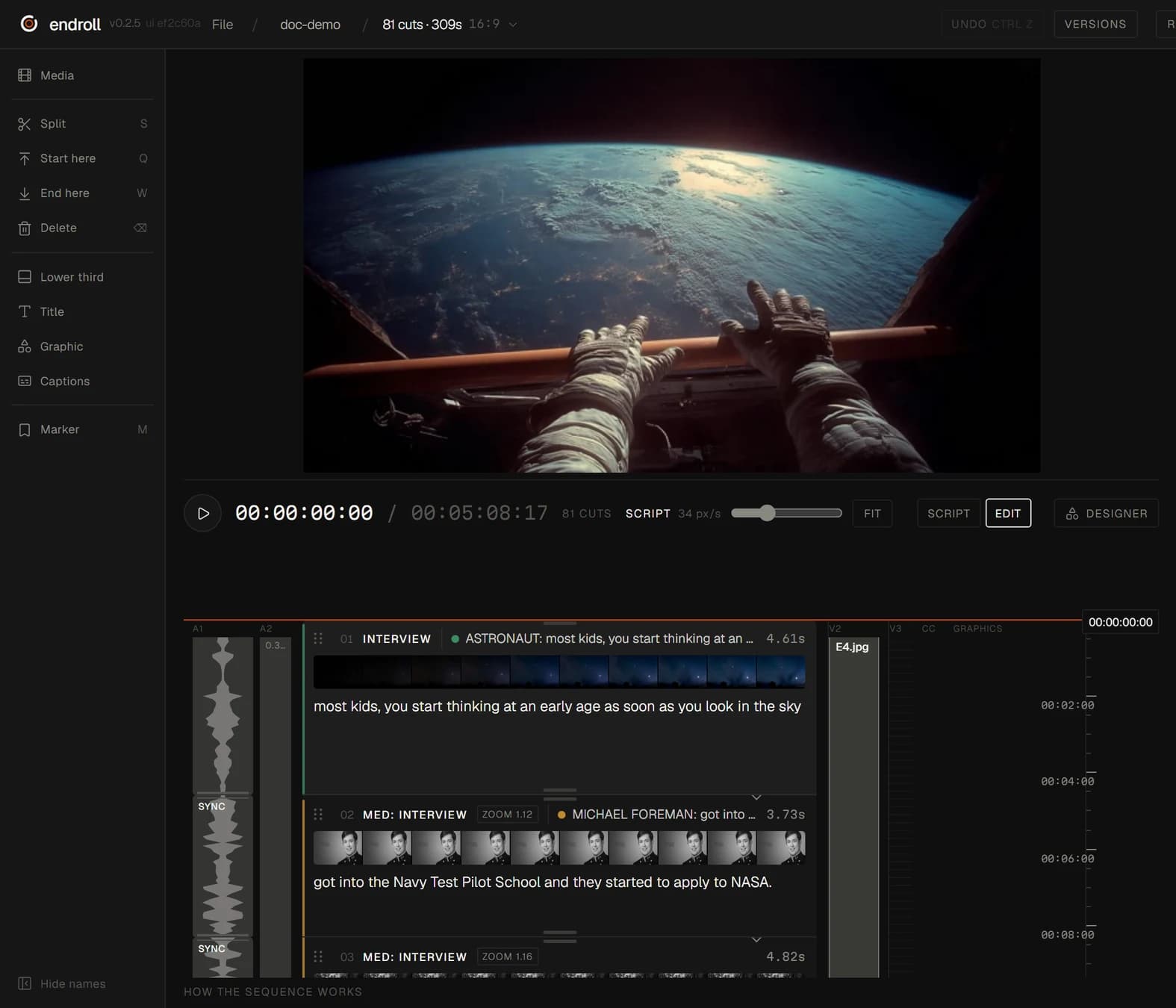
Endroll is one editor, read top to bottom: the film is a list of shots, each carrying the line spoken in it. You don't need to be an editor to read that — and if you are one, the cut opens in Premiere Pro, DaVinci Resolve or Final Cut.